
Workplace occupancy sensors are revolutionizing how offices are managed. But what problems do they solve, how do they work, and which type is right for you? This guide explores the technologies reducing costs, improving collaboration, and boosting employee satisfaction in modern workplaces.
Find the right sensors for your office
What are the benefits of occupancy sensors?
Occupancy sensors help optimize office space usage, reduce real estate costs, improve employee satisfaction and productivity, and give managers real-time data to make informed workplace decisions.
The Hidden Costs of Inefficient Office Spaces
Turning Office Data into Better Decisions
There are plenty of different products to choose from today, but the principle is the same: sense how people use an office space and use that information to help people make better choices. The result? Employees have an easier time using their offices, and office managers can answer key workplace questions instantly.
Different types of occupancy sensor
But there’s more to smart office sensors than occupancy tracking
Which type of sensor is best?
The best sensor depends on your office’s specific challenges, data needs, and goals. Identifying these first ensures that you choose the right technology to address workplace issues and deliver the most valuable insights.
Choosing the right sensor for your office
To get the most from your smart office, you’ll need to find the right approach for your company. This means avoiding common mistakes that apply to every workplace, but it also means defining exactly what your own challenges are. What is your office struggling with? What data do you need to solve those struggles? What workplace questions do you want to answer?
Get your free guide to mastering workplace occupancy sensors
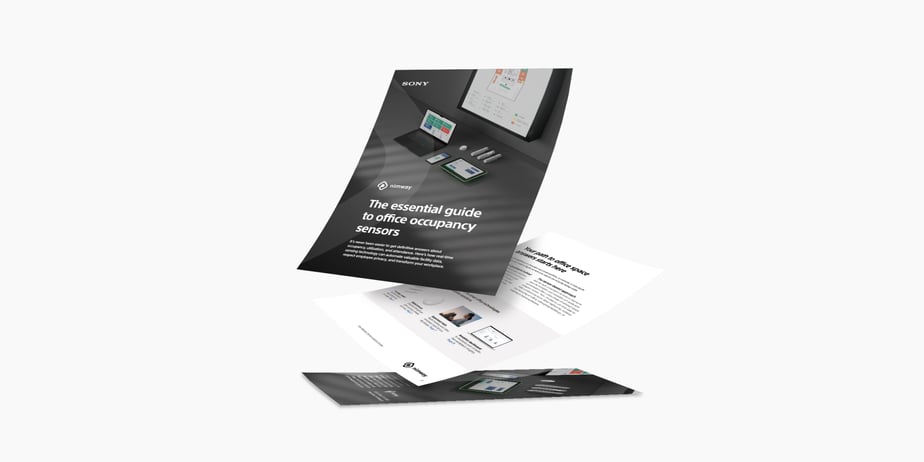
After reading The Essential Guide to Workplace Occupancy Sensors, you’ll be equipped to choose the right approach. The guide introduces you to the wide range of smart office technologies and sensors, how they solve workplace challenges many businesses face today, and it also includes expert advice for getting the best results. Ready to get started?