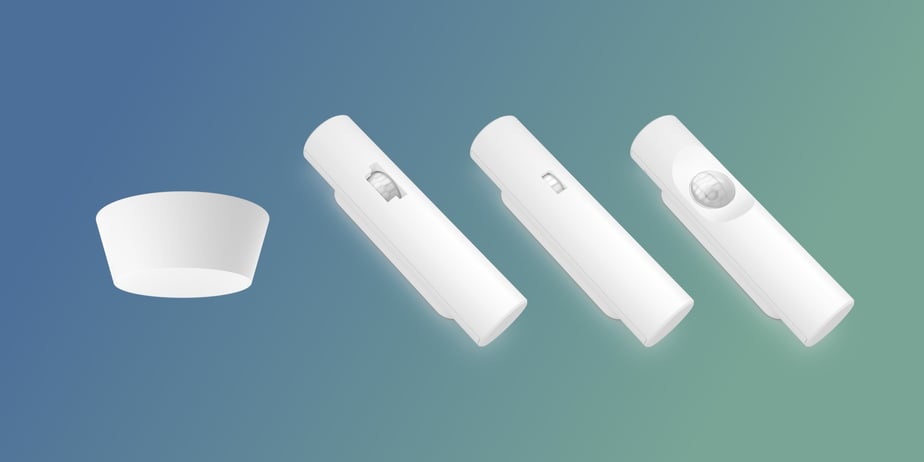
When it comes to measuring utilization, nothing beats sensors. Real-time data uploads mean you get an exact and continuous picture of how workspaces are used. But there are lots of different sensors for different situations. How do you choose the right ones? Here are the four key sensors that will give you accurate sensing coverage.
The right sensors for great workplace utilization measuring
1. Desk occupancy sensor
What are desk occupancy sensors?
Benefits of using occupancy sensors
With this data, everyone in the office can:- Stay informed about which desks are free, avoiding wasted time searching for a spot. At the same time, workplace managers gain valuable insights into utilization.
- Get important information such as if there are enough workspaces, or enough of the right type of workspaces.
- Know what times and days of the week desks are used the most and plan their presence accordingly.
2. Room occupancy sensors
What are room occupancy sensors?
Room occupancy sensors are mounted in meeting rooms or shared spaces to detect movements within them. In larger rooms, several sensors may be required to capture all activity and ensure accurate occupancy data.Benefits of using room occupancy sensors
- This data is especially valuable for workplace managers, who can compare bookings with actual usage and gain insights into how each room is utilized.
- At the same time, connected sensors give employees real-time awareness of meeting room availability, reducing conflicts and improving efficiency.
3. Door sensors
What are door occupancy sensors?
Benefits of using door occupancy sensors
- These sensors provide accurate timing of when a room is occupied—and in some cases, they are essential to detect usage at all.
- While misplaced room sensors may miss activity, door sensors capture every entry, giving workplace managers reliable space utilization data.
4. People counting sensor
What are positioning beacons?
Benefits of using positioning beacons
-
With positioning beacons, managers can track how people move throughout the office.
-
Identify high- and low-traffic areas beyond desks and meeting rooms.
-
At the same time, they enhance the employee experience by supporting navigation and helping them find colleagues.
-
This data answers key questions: How exactly do people move around the space? Where are the busiest and least-used areas outside of desks and meeting rooms.
Create occupancy awareness in your workplace
Real-time occupancy awareness makes room booking and office navigation tools more interactive, dynamic, and productive. In sum, with occupancy sensors, everyone can answer a wide range of occupancy questions.
But to unlock this new type of workplace, real-time data and employee privacy are key features of occupancy sensors.
Compare office sensors
Not sure what office sensors best suit your workplace? Our guide helps you understand what office sensors do, how they work, and which types best fit your workplace needs while ensuring privacy.
FAQ
For office environments, ultrasonic or dual-technology occupancy sensors are typically ideal. They provide reliable motion detection in various settings, including desks, conference rooms, and hallways, without frequent false triggers. Additionally, sensors with adjustable sensitivity and coverage zones can be tailored to fit the specific layout of your office for optimal energy efficiency and convenience.
The best type of occupancy sensor depends on the specific application and environment. Common options include Passive Infrared (PIR) sensors, which detect body heat; Ultrasonic sensors, which use sound waves to sense movement; and Dual-Technology sensors, which combine PIR and ultrasonic methods for higher accuracy. For general use, dual-technology sensors are often considered the most reliable as they reduce false alarms and improve detection rates.